Six months of silence
Analytics that stops receiving data does not raise an error. It shows a smaller number, and a smaller number looks like a quiet quarter.

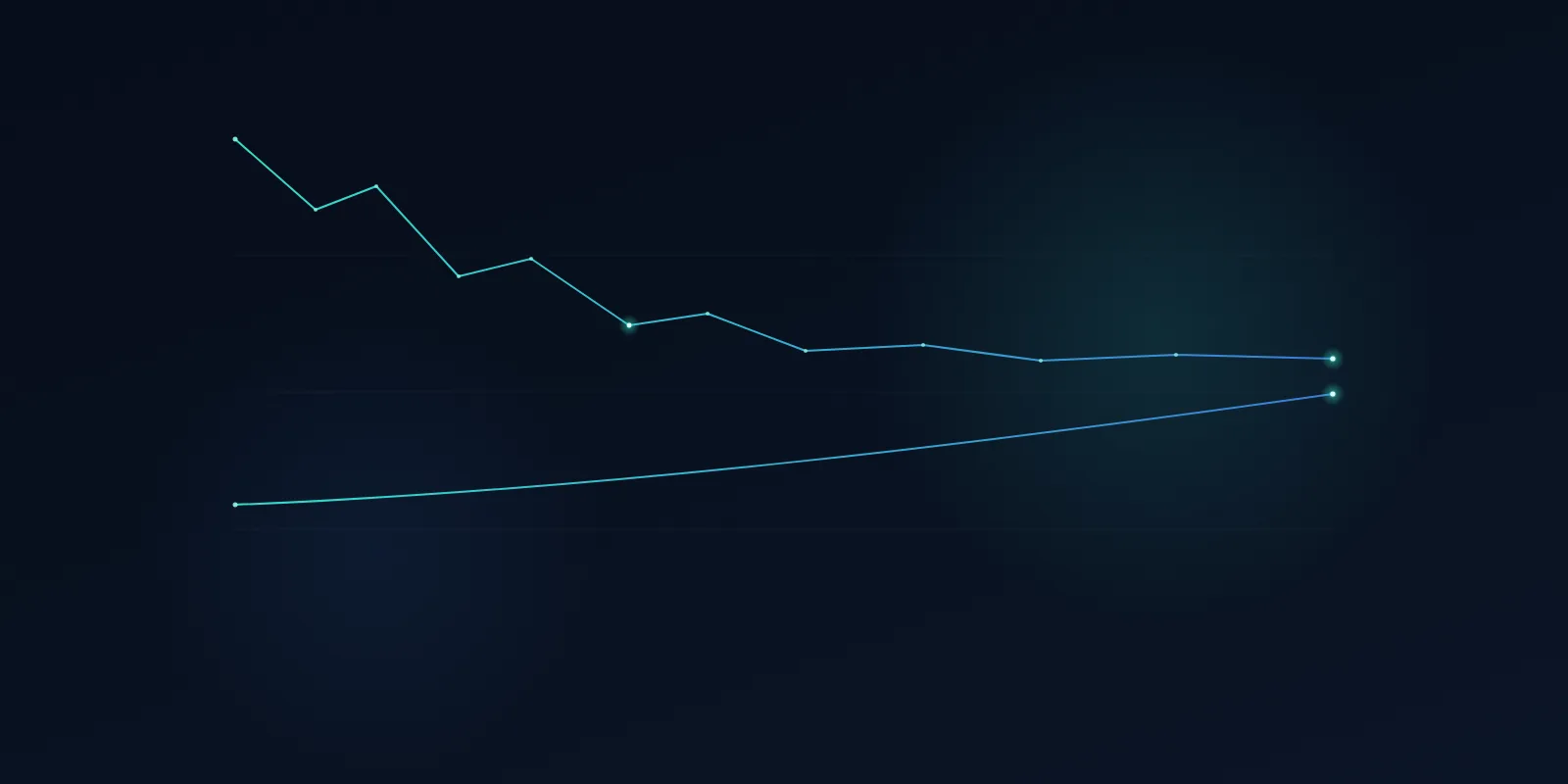
I found this because an automation needed one number. A lead-generation flow for a DACH consulting firm was supposed to report landing-page visits every morning, and the obvious source was the site's analytics property. The property had received its last data at the end of March. Nobody had noticed for six months, because nothing had broken in a way that looks broken. The consent tool on the site had moved to a new major version in spring, and the new version announces a visitor's consent under different event names. Every tag in the tag manager was still waiting for the old names.
A rename in the layer everyone forgets
A consent tool sits between the visitor and every tracking tag on a site. When someone clicks "accept statistics", it pushes an event, and the tag manager fires whatever is waiting for that event. The tags themselves know nothing about consent. They know an event name.
The new version of the plugin pushed events with a new naming scheme. The triggers in the tag manager still listened for the old ones. So analytics, the ad conversions, the cross-domain linker and the pixel events all stopped firing on the day of the update, for every visitor, whatever they had clicked. The site looked the same. The banner looked the same. Consent was collected correctly and then went nowhere.
Nobody tests the consent layer after a plugin update, because an update to a cookie banner does not feel like a change to measurement. It is the change to measurement. Every tag on the site hangs off it.
Your tracking depends on the event names of a plugin you never think about.
The one tag that kept firing
What made this hard to spot was a single survivor. One ad network's tag kept working, because that network's consent integration ships its own opt-in code, and that code still pushed the old event name. So the tag manager was not silent. Reports for that one channel kept filling.
A fully dead setup gets noticed within a week. A setup where one of six outputs still moves looks like a traffic problem, a seasonal dip, a channel that performs better than the others. Partial output is the most convincing disguise a failure can wear.
The leak going the other way
While fixing the triggers I found the opposite problem. A separate events plugin on the same site carried its own pixel ID and loaded an ad pixel directly, outside the tag manager, before anyone had consented to anything. An older pixel tag with a different pixel ID was also still active in the container.
So in one audit the same site had tags that did not fire with consent and a pixel that fired without it. Both come from the same habit: tracking gets added in whatever place is convenient at the time, and nobody keeps a list of where it lives. The fix was small. Empty the plugin's pixel field, pause the old tag, restrict the analytics tag to statistics consent without the advertising signals, and map the consent categories so marketing consent governs the ad signals and statistics consent governs analytics.
Testing it without fooling yourself
The rename itself took minutes, because the container used trigger groups and renaming three triggers repaired every group that depended on them. Proving it worked took several hours, and the test setup lied to me twice.
- My browser automation ran in a tab the operating system considered hidden. In a hidden tab the analytics tag did not load at all, and I spent close to an hour chasing a problem that only existed in my test browser. A headless browser with an ordinary user agent showed the real behaviour.
- Another test browser identified itself as a bot in its user agent. The consent tool is configured not to show a banner to bots, so there was nothing to click.
- The site sits behind a page cache with a 90-minute lifetime. For an hour and a half after publishing, some pages still served the old container. Testing too early looks exactly like a fix that did not work.
The test that counted was a matrix, run per consent state. Statistics only: one analytics request with the consent flags set and no advertising signals. Essential only: zero tracking requests of any kind. Both states checked on a page the cache had already refreshed.
What I check after any plugin update now
- Every consent-dependent tag gets one test hit per consent state after an update to the consent tool, the tag manager or the theme.
- A list of every place a tracking ID is configured: tag manager, plugins, theme settings, hard-coded snippets. The leak lived in the one place not on anyone's list.
- A freshness check on the analytics property itself. If yesterday has zero sessions, something should say so. It is a one-line query.
- Tests run in a browser that looks like a visitor: visible, ordinary user agent, after the cache has turned over.
Measurement that stops does not fail. It reports less. Something has to check that yesterday exists.
Hung Mai is an independent consultant in Weilmünster, Germany, mostly working remotely. He plans, builds and monitors AI automation for marketing and sales for companies without a digital team. About Hung Mai